Thursday, February 23, 2012

Where to Eat Vegan: Yo Rita - Pittsburgh, PA


After getting lost on the way to yoga on Penn Avenue I found myself on E Carson street. Funny thing is, I already knew the name and thus didn't feel the least bit lost. South Side, and in particular E Carson street, is a bit of a vegan and vegetarian gem. Jammed with tattoo shops, yoga studios, vintage shops and restaurants, E Carson is a little on the grungy side - but that's just the way I like it.

After stretching out my stomach in the (painfully) slow Yin class at Breath Yoga Studio I shuffled down the street for some tacos and salad at Yo Rita. I had read online that they were willing to accommodate vegans and while their menu asked for "no substitutions" to be made, my server assured me that my requests to leave off the dairy would be happily fulfilled.

Their menu is limited but well varied with several options for both meat eaters and veggies. Chips and two salsas - a chunky mild and a smooth medium - are brought to the table within minutes of sitting down. I started with a small but interesting salad of greens, jicama, radish, carrot and salted pumpkin seeds with an agave vinaigrette. The saltiness of the pumpkin seeds and the sweetness of the dressing provided a really nice contrast and all the crunchy greens and veggies made me feel all healthy and stuff after my yoga class.

Then came the taco! Served on soft white tortillas and a bed of cabbage, there are all kinds of fillings offered. Portobello mushrooms, crispy fried tofu, potatoes? Yum! I opted for the Velvet Underground that was running as a special that night. Their online menu doesn't seem to be up to date as the Velvet Underground is ON that menu but was only a verbal special when I went. Also - where was that brussel sprout taco last night!

I digress. Roasted beets, sweet potatoes and scallions made up the simple but flavorful taco I scarfed last night. Of course, to be made vegan they had to hold the aji amarillo crema and the aged cheddar. Would it have been better with some sort of cashew crema and or vegan sour cream and cheese? Well duh. And Yo Rita..if you're reading this... get on it!

But seriously, the food was all well prepared, fast and cheap. The tattoo style logo sets the tone without the rest of the inside decor going over the top. Service was super friendly and I look forward to sweating it out at yoga and eating a veggie taco again next time. Oh but...could I get some guac with dem tacos please?

Thursday, February 16, 2012

Where to Eat Vegan: Cafe Green - Washington DC


Cafe Green is housed and operated out of a cute rowhouse on 17th Street between Dupont and Logan Circles. Their menu is a cross between American soul food and Korean noodles and pancake with a full separate menu of shakes, smoothies, juices and frozen frappes. They also have a substantial amount of raw dishes on the menu! I can't wait to try their mung bean pancakes, the mac and cheese with kale and the raw pizza next time.

As usual, when I eat at a vegan restaurant, I was completely overwhelmed with all of the choices available. Needless to say it will require many more trips to Cafe Green before I will have tasted enough of the menu to choose my favorite but the two trips I have made so far have both been very satisfying.

We started with the Raw Chips and Dip - carrot and flax chips with a lemony guacamole to dip them in. They were fragile but tasty and paired well with the chunky guacamole.

Rachel ordered the Jobche with mushrooms (which they forgot to put on but then brought a side bowl of with MORE noodles and greens). We were intrigued by the mystery of yam noodles and were both impressed with their light fresh flavor. The dressing of the noodles tasted like a blend of lemon and sesame and the thick slabs of mushrooms added an extra earth flavor to the dish.

I went for the cheeseburger. I'm always curious about vegan burgers at any restaurant that offers them because I feel like they are such a hard thing to get right. Sometimes they are too mushy. Sometimes they have way to much of one kind of vegetable (usually carrot) and sometimes they are really dry. I always order them with a tiny bit of trepidation because nothing is worse than having food envy when everyone else at the table was smart enough not to take a risk on the burger. And yet, I am still drawn to ordering them wherever I go.

Well let me tell you, this may be the best vegan burger I've had yet. It may not look too fancy in the picture but it was just right. Great texture, great combination of flavors and the right balance of moistness and dryness. Composed of veggies like kale and mushrooms (I was pretty much sold at this point) and sprouted quinoa and lentils and topped with sauteed peppers and onions and a tasty cheddar cheese - I had to force myself to slow down and savor the flavor and not just devour it in two bites. The curried apple carrot slaw on the side was surprisingly good too - and this from someone who usually can't stand any form of slaw.

I held myself off from having any drinks or dessert this time but I highly recommend their milkshakes!


Check Cafe Green's website for the events and classes that they offer. Im excited to attend one of their Raw Life Workshops in the future and learn how to not cook some tasty treats.

Monday, January 23, 2012

The Mythology of English: Part 1

Warning - it's about to get nerdy in here! For the next month I will be swamped, overwhelmed and completely reveling in the TEFL certification course I am taking and when I have a few free moments (class was 10 hours today with only a 20 minute lunch break AND I taught a 40 minute lesson to a group of non-native speakers) I will try to share some of the exciting and interesting things I am learning! If you find linguistics or cultural differences or talking philosophically about American culture a snore fest then come back after February 15th. I'll be pretty fixated until then.

It's only 3 days into my course and already I feel like we have covered so much material. One of the aspects I have found most enthralling (its SO totally up my alley) is the discussions we have been having about the mythology of the English language.

Before I get into that though let me back up and talk about why we teach English and some of the different uses of English. English that isn't being taught to non-native speakers fall under three little acronyms: ESL, EFL and EIL. Lemme break it down fo yah (and there will be a WHOLE post about the argument of how the sentence I just used should/can be categorized and whether it counts as English)

ESL - English as a second language. But more directly this means English that is being taught/used in a country where the L1 (native or official language) is English. For example an African immigrant who is learning English IN Great Britian.

EFL- English as a foreign language. More directly this means English that is being taught/used in a country where the L1 is NOT English. For example a French person learning English IN France.

And then the most interesting of the three!

EIL - English as an international language. What does that mean, you ask?

This is where the mythology of English starts coming into play. There is an idea, out there, floating around, that English belongs to everyone now. English belongs to no one. One might argue this and say well English belongs to the English speaking countries and is connected to our culture(s). The only reason people learn English is to communicate and do business with US.

Ah but here's where it gets rich. with EIL the English LANGUAGE is taught but not necessarily the CUSTOMS of an English speaking society. We've all heard of English being used as a "business language" in which case there are usually native English speakers in the situation but consider this curious form of English:

In Thailand EIL is used not to communicate with Americans or the British, but to communicate with the Japanese tourists. The understanding is that while this is an L2 (non-native or second language) for BOTH parties involved, it is one they can both use to communicate. But here is the kicker - along with learning English to communicate with Japanese tourists the Thai also learn the Japanese culture, NOT an English speaking culture. In this sense it is clearly shown that the English language is being used as an international form of communication that is separate from its original contexts and cultures. Just take a second to imagine that. A Thai tour guide speaking to a group of Japanese tourists in English while at the same time using traditional and socially accepted Japanese forms of interaction. Do I have any commenters that could give us an example to illustrate how strange this would be to witness as a native english speaker?

But why English? Aside from that fact that English speakers did a very effective job at conquering and colonizing large swaths of the Earth, along with many other reasons of course, English as a form of communication is seen (myth!) to be democratizing. This seems to be especially believed to be true of American English. Throw out that formal language! Call your professor and boss by their first names and don't you dare think about making OUR nouns gender specific!

English can be seen as a simplified language. In some ways this is true. Consider this: there are 11 ways to address someone in Vietnamese. For example you use the suffix Chi when you are addressing a woman who is slightly older than you, Ahn when addressing someone the same age as you and the list goes on. In English we don't have these levels of formality or such a clearly defined hierarchy of respect. In this way English can be very attractive as an international language because it is perceived that everyone is addressed in equal terms. Interestingly English has the largest lexicon of all the languages. By a lot!

But is English really as democratizing as it seems? Are we really as casual, informal and non-hierarchal as our lack of formal titles suggests? I'll delve into this theme of the Myth of English as well as the Myth of America and their cross-section in my next post but I would love to hear some comments! What do you think?

Wednesday, January 18, 2012

Book Review: The Accidental Buddhist


So remember back in September when I mentioned a growing interest in Buddhism? Yeah still interested. In fact I have joined a meditation group that meets in Old Town on Sundays. My legs fall asleep, my monkey mind chatters, but it gets me out of the house and into a group setting every Sunday morning.

As usual, I have turned to books, and a growing stack of them at that, of Buddhist philosophy and musings to explore this interest. Upon finishing The Tibetan Book of Living and Dying I realized that this was a huge thing to undertake alone. All the culture, tradition and Tibetan words were kind of overwhelming and while excitingly foreign, still very foreign. I wanted to write about the book a bit but really felt like I had no grasp on the subject to do so. So I'm backing up, taking it light and moving in slowly.

So I chose a softball book to start. The Accidental Buddhist was an incredibly quick read. If I hadn't started that book at 10pm I easily would have crushed it in a day and even starting it that late I was done with it by early afternoon the next day. But this book, while humorous and silly a lot of the time, packed a whole lot of ideas in one quick punch.

While there is a beautiful, exotic quality about Buddhism, yoga and meditation there are times when it strikes me as so very un-American. And I don't say that in a "Well if you don't like it you can..." kind of way, just...well.... it's not what I grew up with and its certainly not a language I'm familiar with. And I have been to Buddhist meetings or done chanting and thought to myself "What the heck does that even mean?"

Dinty Moore talks about this a lot in the book. As a man who was raised Catholic, turned apathetic to all religion, turned accidental Buddhist, he goes through the process of trying out lots of different forms of Buddhism searching for an American style. He questions the practice of dokusan (basically a private meeting with your teacher that is proceeded by a series of complicated bows and prostrations and has specific rules for where you can sit, when you can speak and when you must leave), he questions the intersection of Christianity and Buddhism (he meets with several practitioners of meditation that hold positions of leadership in the Christian faith) and he questions the possibility of our American gusto marrying with such a calm and careful lifestyle.

The whole concept of an American style of Buddhism can have people up in arms. You'll get people all in a tizzy bringing it up and they'll start defending the tradition for traditions sake. Listen people - I don't buy eating meat just because it's traditional so I'm not going to fall for this "you must sit on your uncomfortable cushion and chant these unpronounceable words because that's the way it's always been" kind of attitude. It seems that the reason "American style" is unappealing is that it seems to translate to a Buddhism that is cheap, self-obsessed, stripped away of all substance, and is brimming full of misguided egos buying every accessory and looking for the magic instant cure to help them relax after a traffic jam while totally missing the point.

But does it have to be that way? Does it have to be traditional strict Buddhism or nothing? Do we who want to practice Buddhism need to turn our back on our culture, throw up our hands and say "Americans are too shallow to get it so I'm going Tibetan." I really don't think so and while Moore doesn't find a definitive answer or American style on his quest he does run across some interesting ideas. At one point Moore actually gets a chance to speak with His Holiness the Dalai Lama and he asks him where he thinks Buddhism fits into modern American culture. The Dalai Lama gives a surprising response. Basically - it doesn't.

While I perhaps wouldn't go as far as that (no disrespect to His Holiness of course) I do feel like Buddhism will need to be adapted to our culture some - while still retaining the things that make it so attractive and worthwhile of course!

In looking at American culture there are several things right up front that clash with Buddhism. For example we are a status driven society. Those who don't strive for more, those who don't compete are seen to not be making progress. Progress is everything in the US - from how we go through school to our jobs to our relationships and whether we have children or not. Those following an "alternative" lifestyle - for example those who don't want a car or those who would rather live with friends in a group rather than with a partner - are often pitied in our society. They are seen to be "failures."

So how can a society with such a competitive drive approach the world without expectations as the Buddhists teach? How can they be mindful, compassionate, even present when we are so consumed with our neighbors car, when we can take our next cruise, or whether or not the color of our jeans is still in style?

Moore writes "By expecting things to deliver everlasting delight, we are setting ourselves up for a fall" He uses the example of wanting a new job and how we are so sure that a new job will fix things. But the excitement of the new job is fleeting and then the cycle starts again. Moore terms this "feeling vaguely dissatisfied." Buddhists call it samsara.

My roommate and I have talked about this in relation to travel. We both are attracted to this idealized dream of a traveling lifestyle but my personal fear is that the NEED for that lifestyle, the fact that it seems IMPORTANT to be somewhere else, only really means that I'm grasping. That I'm placing expectation on it. Moore says "It is the same thing with marriage - we expect marriage to make us happy, and it does for a while, then our problems creep up again, and we think, "Gee, I guess I married the wrong person."

Sitting in meditation, for an American, fights against all our upbringing. We are pushed from a young age to participate, perform, and multitask to our highest potential. And in mediation...well you just sit. And that's it. Don't think. Don't try. Just sit.

Moore gives a perfect example of how our American brains rebel from this idea of just sitting without expectation and instead tends towards setting up mental checklists of progress. Shunryu Suzuki, founder of the first Zen training center in America and author of Zen Mind, Beginners Mind talks in his book about what he calls mind weeds. Mind weeds are the distracting thoughts in your head. The Monkey Mind as it is also called. Suzuki says that these weeds are in fact a good thing. He says just as weeds can be composted to nourish a garden, sitting and watching your weeds can turn them into nourishment for your practice. In response to this Moore writes:

"So here I am, it seems, with a mind full of dandelions and crabgrass, worrying about it, and once again missing the whole point. Weeds are good. Weeds aren't what's stopping me, it's just my Monkey Mind insisting that weeds are somehow bad. If I let the Monkey Mind pronounce me an abject failure before I even begin, what chance will I have against him? ...Quit worrying so much and just do it. Just sit. ... Now I see. The difficulty I have with Buddhism is that it's just too damn simple."

In general I found this book to be engaging and thought provoking. When I finished my roommate and I had a good hour or so conversation about it and the concept of an American style of Buddhism. She brought up the fact that one of the things she appreciates about Buddhism is that it teaches you to question everything, even Buddhism. With that point out in the air I postulated "And why not Buddhism in America then? Why can't we question the chanting and the language?" Im not saying tear it all down and start from scratch. The lessons are there - the teachings are there, but at what point do you continue with the trappings of the rituals when they have no cultural significance? Buddhism has adapted many times. The Japanese have their own style of Buddhism, why not the Americans?

Learning the traditional ways is of benefit for sure. But blindly following a practice that holds cultural significance for a people you are not a part of seems counterproductive. It seems like a story we are telling ourselves. Like a beautiful picture. Like an obsession with the exotic qualities of a tradition that have led us to accept all the bowing and bell ringing as the teachings itself, rather than seeing this for what it is, a cultural manifestation of the root ideas. And in this vein of talk - the root ideas of Buddhism are in so many ways similar to the root ideas of Christianity. In the book Moore draws a link between the ideas of Nirvana and the Holly Spirit.

Father Kennedy, a Jesuit priest as well as being an ordained Zen teacher that Moore meets says "The very meaning of Zen is not to imitate anyone, because there is nothing to imitate, but to be yourself, so it is rather silly for Americans to continue to imitate Japanese, or Tibetan, customs. We respect our teachers and respect the forms that they bring, and we keep them up to a certain extent, but always it has to be an integration with the present moment."

In my newly developed interest in Buddhism, I found that this book had a lot to offer. Not only did it help expose me to some different style but it did so in a modern context.

In the end though I will just have to sit and see. One of the quote I really liked from the book came from Geshe Lobsang Tenzin Negi. He said "All of this talking, this is not really Buddhism. You can get instructions for swimming, but if you want to learn to swim, you have to get into the water."

Sunday, January 15, 2012

Where to Eat Vegan: Elevation Burger


Fairly frequently I get asked if I miss any food from my pre-vegan life. Mostly the answer is no. I make everything I could possibly want when I'm craving something special and frankly, these days I'm getting back to basics and eating lots of piles of delicious winter vegetables and rice. But, every now and then a girl wants a burger and fries.

I found Elevation Burger online when searching for vegan friendly place to meet up with my friends. With locations all over VA, MD, DE, PA, NY and even down in TX, and CA, I was eager to try these burgers out. Elevation serves two veggie burgers, one vegetarian (it has mozzarella in it) and one vegan. They also, interestingly, have a burger called Half the Guilt which is 1 beef patty and one veggie patty. Kinda strange idea.

NOTE: It has been brought to my attention that their buns are not vegan though! So opt for the patty wrapped in greens.

One of the things I appreciate about this place, which has become more common among fast food places, is being able to see your food being made. Behind a sheet of glass scoots the conveyor belt of the grill topped with little hot plates to equally grill your patty as it makes its way to the end of the line. Eating at burger joints that aren't all veg usually mean that your burger sits on the same oil slicked grill as the meaty burgers you have sworn to avoid. Elevation Burger has two grills running down their line, one for meat burgers and one for veg ones, hurrah!

While standing in line we watched them yanking down the crank that pushes the potatoes through the slicer. The fries are shoestring slim and are fried in olive oil until deliciously crispy.

Our burgers were brought out to us by one of the employees, wrapped in paper and overflowing with fries. I got a vegan burger with mushrooms, caramelized onions, tomato and ketchup. My friend got the vegetarian burger with balsamic mustard. My vegan burger actually looked more like the meat burgers with its dark brown color but it clearly had corn, broccoli and red peppers stuffed in with the obligatory burger fillers. The vegetarian burger was an off orange color and seemed to have more rice present than anything else discernible.

While I'm usually pretty happy with my vegan burgers, I used to always order cheeseburgers. I'll say it again, at risk of sounding like a broken record, but is it so hard to offer a vegan cheese? It's not a huge deal really, but it would just be a great perk.

Overall. Decent, filling and really inexpensive. Burgers are less than 4 bucks and fries are around 3. Most amazing vegan burger I've ever had? No, but at 4 bucks who would expect it to be. At the very least it's nice to know it's there. They also offer to wrap your burger in greens rather than a bun which I thought was cool. Don't bring your vegan date here of course, but for a quick bite, especially in the company of meat eaters, this would be a great place to meet up or stop on a road trip.

Tuesday, January 10, 2012

A New Calendar Year

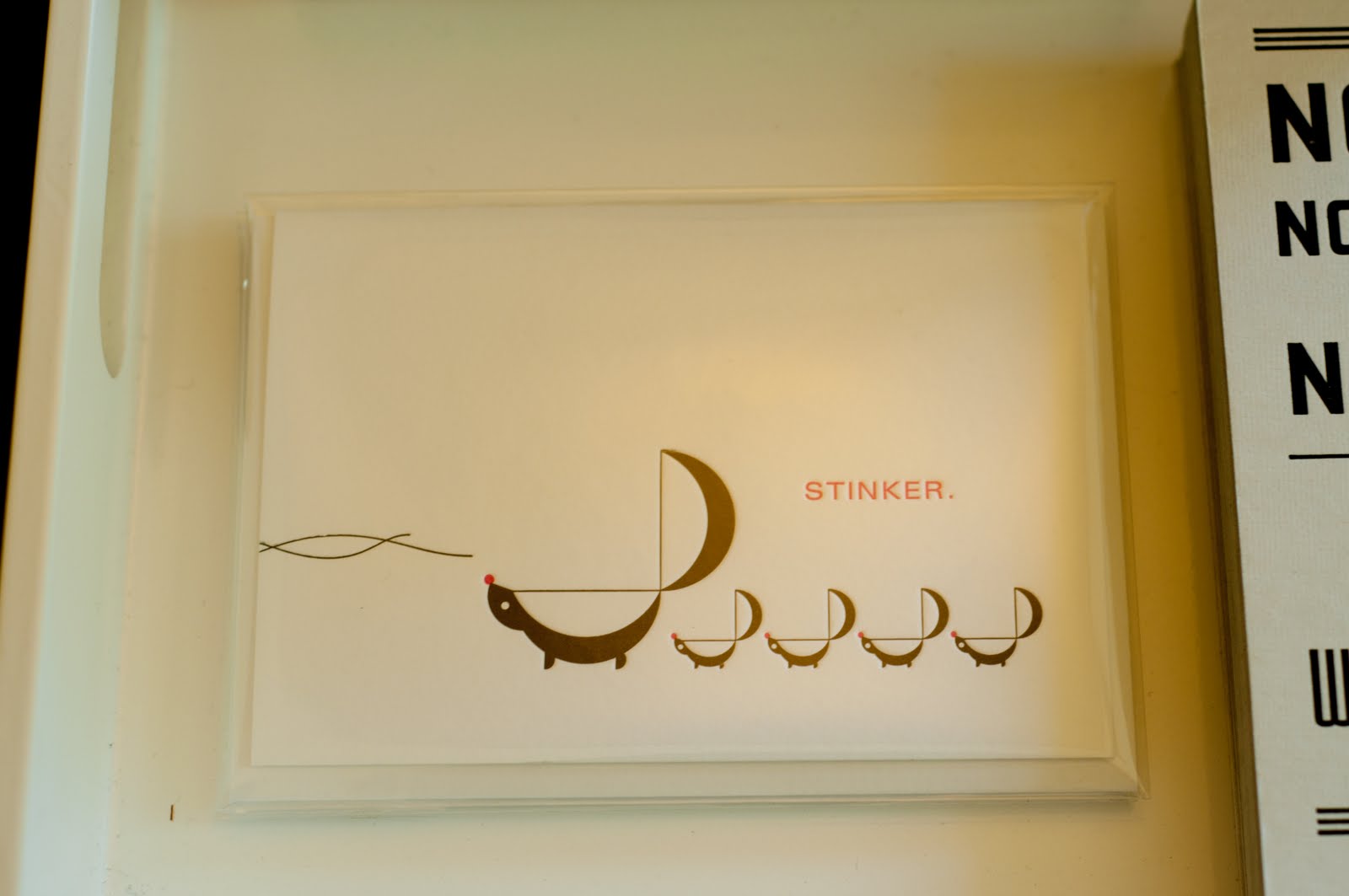
I'm not sure I've ever really bought myself a calendar. A planner, yes, but not a calendar. This year I bought one from Fifteen Eleven because I really loved the design but also, each page breaks off to form a postcard with a really pretty, hand-printed design for each month. Email me your address at laceygwalker@gmail.com or leave a comment and I'll send you one sometime this calender year!


By the way, I kinda meant to blog about this place when I first went there one day with Rachel. It's a cute little paper supply store in Old Town Alexandria with some really cute stuff. Here are a few pics from that day we went right after they opened. I've considered getting some hand-printed business cards done here or maybe taking a class.


Thursday, January 5, 2012

New Old Things

Chelsea and I decided to go antiquing on one of her last days in the US. As usual I managed to find things that I don't technically need but WILL use and also as usual spent too much. Chelsea knew of The Emporium of Olde Towne in Gaithersburg, MD from going there with her parents as a kid.

I was really really surprised and impressed with how reasonable the prices are and Grace, the owner, was so happy to have us young kids in her store buying up some history. She told us that she wishes her grandchildren would appreciate her things and the importance of keeping antiques and vintage items in the family. They don't seem to agree with her. In any case we chatted about our travels (I bought several postcards of places I visited in Italy) and presented our cases for why the Italians are worse than the French and visa versa.

In any case here is a look at my treasures.


Blue vintage tin with yellow flowers - $6. This will make a nice cookie tin.


Vintage red and tan pint sized thermos - $12. Are these safe to use? Does anyone know?


Hazel Atlas glass jars with compass lids - $8 each. I LOVE these for storing beans, nuts and dried fruits.


Israeli made trivet- $8


Family postcards - $1 each


Black and white postcard of Italy - $2 each


Colored travel postcards - $2 each

That's it, just wanted to share!